There are a spread of treatments for gum disease counting on the stage of disease, how you'll have skilled earlier treatments, and your overall health.
Treatments range from nonsurgical therapies that control bacterial growth to surgery to revive supportive tissues.
Non-surgical Treatment for Gum Disease
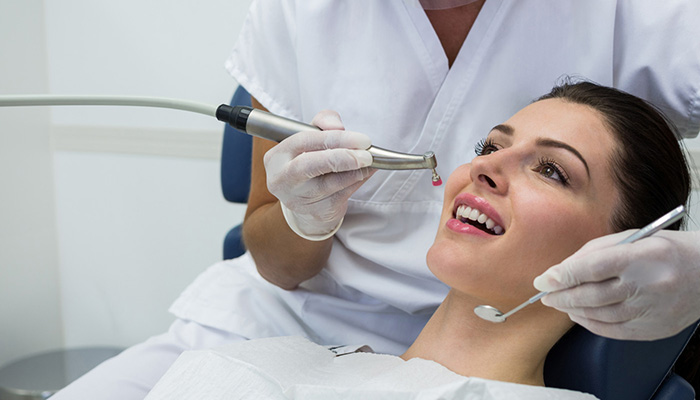
Treatments for gum disease that do not involve surgery include:
Professional dental cleaning- During a typical checkup your dentist or skilled worker will remove the plaque and tartar (plaque that builds up and hardens on the tooth surface and may only be removed with professional cleaning) from above and below the gum line of all teeth. If you've got some signs of gum disease, your dentist may recommend professional dental cleaning quite twice-a-year. Dental cleanings aren't a treatment for active gum disease.
They are, though, a crucial precautions which will assist you debar its development. Scaling and root planing. this is often a deep-cleaning, nonsurgical procedure, done under an area anesthetic, whereby plaque and tartar from above and below the gum line are scraped away (scaling) and rough spots on the root are made smooth (planing). Smoothing the rough spots removes bacteria and provides a clean surface for the gums to reattach to the teeth. Scaling and root planing is completed if your dentist or periodontist determines that you simply have plaque and calculus (hardened plaque, also called tartar) under the gums that must be removed.
Surgical Treatment for Gum Disease
Some treatments for gum disease are surgical. Some examples are:
Flap surgery/pocket reduction surgery- During this procedure the gums are lifted back and therefore the tartar is removed. In some cases, irregular surfaces of the damaged bone are smoothed to limit areas where disease-causing bacteria can hide. The gums are then placed in order that the tissue fits snugly round the tooth. This method reduces the dimensions of the space between the gum and tooth, thereby decreasing the areas where harmful bacteria can grow and decreasing the prospect of great health problems related to periodontitis.
Bone grafts - This procedure involves using fragments of your own bone, synthetic bone, or donated bone to exchange bone destroyed by gum disease. The grafts function a platform for the regrowth of bone, which restores stability to teeth. New technology, called tissue engineering, encourages your own body to regenerate bone and tissue at an accelerated rate.
Soft tissue grafts- This procedure reinforces thin gums or fills in places where gums have receded. Grafted tissue, most frequently taken from the roof of the mouth, is stitched in situ , adding tissue to the affected area.
Guided tissue regeneration- Performed when the bone supporting your teeth has been destroyed, this procedure stimulates bone and gum tissue growth. wiped out combination with flap surgery, alittle piece of mesh-like fabric is inserted between the bone and gum tissue. This keeps the gum tissue from growing into the world where the bone should be, allowing the bone and animal tissue to regrow to raised support the teeth.
Bone surgery- Smoothes shallow craters within the bone thanks to moderate and advanced bone loss. Following flap surgery, the bone round the tooth is reshaped to decrease the craters. This makes it harder for bacteria to gather and grow.
Clinic Timing
Kindly call on 9631081441 for appointment booking of the same day onlyMonday
10:00 am - 8:00 pmTuesday
10:00 am - 8:00 pmWednesday
10:00 am - 8:00 pmThursday
ClosedFriday
10:00 am - 8:00 pmSaturday
10:00 am - 8:00 pmSunday
ClosedAddress
In Telco ram mandir campus,
cross road no. 16, Telco colony, Telco, jamshedpur, jharkhand
831004