Dental Implants Are small titanium “Root-Form” screws, which are placed in your jawbone by an Implantologist to replace missing or failing teeth. After healing, the dentist will restore your implants and place crowns on top.
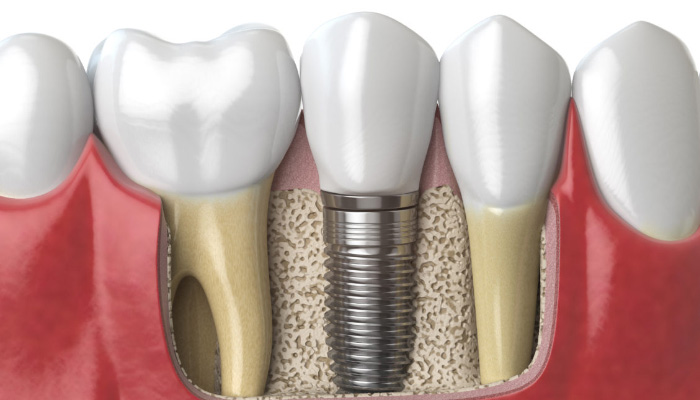
It should however be kept in mind that only a specialised Dental Surgeon (Implantologist) who is Certified and highly trained in the field of Implantology should be practicing Dental Implants. This field requires a deep knowledge of anatomy of oral tissues and an immense experience as it deals with vital structures such as blood vessels , Nerves & glands and even the slightest margin of error can be fatal for the patient.
Dental Implantology is an extremely vast field , and it incorporates various different aspects,techniques, procedures and protocols which have been postulated from different parts of the world after a lot of studies and research work. All the patients who are indicated for an Implant treatment differ from each other in terms of their Bone quality, quantity, density & mineralization.
These factors depend upon the patient’s age, sex, systemic conditions like preexisting diseases ,environmental factors like diet and masticatory forces and many others. Treatment plan has to vary from patient to patient and should be customised according to patient’s overall health, aesthetic and functional expectations and proximity of vital structures to the operating area where the Implants are being planned.
Dentistry is constantly evolving and everyday new materials, innovations & techniques are being found to achieve the best possible overall oral health of our patients.Since many years, Crowns & Bridges,and Removable Dentures have been the standard treatment of choice for the replacement of missing natural teeth.
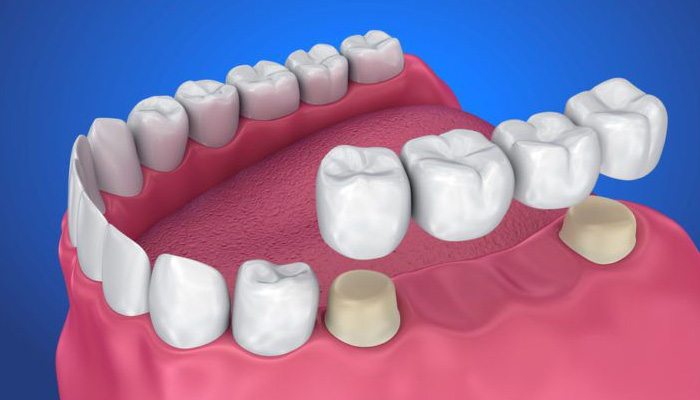
These options of treatment still very much exist,although a large community of people are now demanding treatment resorts that are more reliable, more comfortable,long lasting and which does not require multiple post treatment visits or modifications to be done in the prosthesis due to some or the other discomfort posed by the dentures.
As reported by a lot of patients, Removable prosthesis takes away the pleasure and Joy of having food. Everyone wants to enjoy the meals and to be honest, nobody wants to keep visiting the dentist every 2 weeks to get some trimming or correction in the removable prosthesis.Also the fact that a removable prosthesis needs to be fabricated again in a span of 5-10 yrs owing to changes in the shape & Size of the bone can’t be overlooked.This wastes both time and money and leaves a patient exhausted.
For the past few years now, Dental Implantology has been widely adopted as a preferred treatment option.It has become an indispensable part of the mainstream dentistry, enabling our specialists to improve the quality of life of large patient populations. Using Dental implants, the technology is helping patients return to optimal oral health. Overall, dental Implants are a better & a more permanent tooth replacement option compared to dentures, yielding much better results. Lets see how.
How dental implants edge over other treatment options ?
- Fixed prosthesis , no hassles of removing and maintaining, unlike removable which might me lost or broken.
- Does not demand refabrication or modifications of prosthesis very often unlike removable dentures.
- Simulates more closely your missing natural teeth, the food can be relished better.(Hot & Cold can be perceived better)
- Less chances of food lodgement and tissue impingement unlike FPD(Crown & Bridge), better oral hygiene and less mouth odour.
- Doesn’t involve or bother adjacent healthy teeth at all, unlike fixed bridge that is supported on adjacent teeth.
- Usually Implants is a Lifelong treatment if maintained properly and followed up regularly with your specialist.
- • They can be used to add dramatically greater retention, stability and support compared to removable partial dentures or complete dentures.
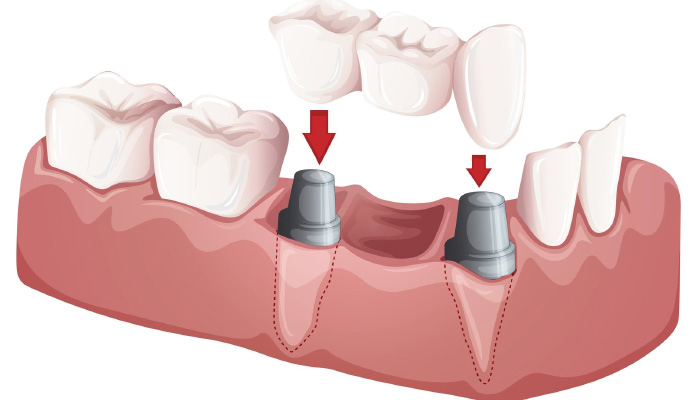
despite the fact that they are slightly heavy on the patient's pocket as compared to other treatment options. Patients nowadays are very well aware and want to get the best possible treatment results with minimal investment of time. TIME FRAME
Depending on the technology used, implants at Dantaarogyam are categorized into 3 types, based on the time required:
- Two stage implants: The procedure is carried out in two stages spread over a minimum interval of 3 months. The first stage involves the placement of the implants and requires one to two sessions. The second stage involves the fabrication of the crowns (teeth). This is an obsolete technology and only used in those few cases where single stage implants are clinically not possible.
- Single stage implants: The latest in dental implant technology, this involves completion of the entire procedure, right from extractions, implant placements and fabrication of the crowns (teeth) in one stage of approximately two weeks. This system can be used for almost all types and categories of cases.
- Immediate implants: This is a specialized technique, allowing teeth to be replaced in a single day. Most cases are eligible for this technique; however, scans and evaluation are required to confirm this. This system is a revolutionary concept that combines precision surgery with specialized implants for immediate results. When it comes to replacement of teeth with implants, each individual has unique needs. Whether it is the extent and quality of the bone, the relation of jaws, an individual's preference, time constraints or budget, there are hundreds of possible situations, each requiring a customized solution. We are well equipped to cater to any situation through our broad range of expertise.
Conventional Implants in Partially Edentulous Patients
Removable Partial Dentures are an affordable and effective treatment option for partial edentulism. But in the past few years, Implant-supported fixed partial denture has gained popularity as an alternative treatment option for rehabilitation of patients who are partially edentulous.
Implant treatment edges over removable dentures in terms of esthetics, comfort and function and self-esteem . But prosthetic rehabilitation of partially edentulous patients should involve thorough evaluation of clinical aspects such as type of occlusion, vertical dimension, orientation of the occlusal plane, presence of functional or skeletal deficits, free-way space, size, number and location of edentulous areas. Therefore, radiological evaluation of bone support using an OPG or CBCT is important in these cases.
The design, the number and the arrangement of Implants to be planned in a partially edentulous case is largely determined by Topography of Bone and the location of adjacent and opposing teeth.
The radiological examination of the bone support using a radiological guide is important in cases where multiple Implants would be placed.The radiological template’s purpose is to give a visual representation of the future Implant referring to ideal positioning in imaging. Prosthetic rehabilitation of partially edentulous patients with Implant-supported prostheses has many advantages such as fixity, good resistance and psychological comfort for the patient. However, it is important to respect the design, biomechanical, esthetic and occlusal requirements to obtain a satisfactory result.
Bone Augmentation Procedures(Bone Graft Procedures)
Sinus lift procedure / surgery
It is a surgical procedure which is done to increase the amount of bone in the posterior maxillary region (upper jaw bone area) or in the area of upper premolar and molar teeth by lifting the membrane of sinus (aka Schneiderian membrane ) and placing a bone graft.
Sinus lift procedure is also known as Maxillary sinus floor augmentation, sinus graft, sinus augmentation or sinus procedure. After the loss of teeth, the alveolar process starts to remodel.The socket of the extracted collapses during healing leaving an edentulous ridge. This collapse causes a loss in both height and width of the surrounding bone. Also, after the loss of a maxillary molar or premolar, the maxillary sinus is pneumatized in this region which further diminishes the thickness of the underlying bone.
Contraindications of Conventional Implantology
There are certain medical contraindications to Conventional Implant Treatment, as certain complications may arise which can be serious or even life risking for some patients. Contraindications may be divided into three categories:
Absolute contraindications:
Dental implants should not be considered at all as a treatment option.These could be :
- Recent myocardial infarction Or any other cardiac attack
- Uncontrolled Hypertension
- Uncontrolled Diabetes
- Severe Renal Disorders
- Generalised Osteoporosis
- Heart valve Prosthesis
- Chronic Alcoholism
- Heavy Smoker
- Radiotherapy in progress
Relative contraindications
Dental implants can be considered only once after a specific problem has been dealt with.These are :
- Insufficient size of the available alveolar bone. As the size could be recovered by bone augmentation. The relative contraindications are only valid during the period the body is compromised. After bringing down the parameters to an acceptable level, the Implants can be placed but these cases require constant monitoring along with strict home care hygiene and constant follow-ups to the dentist for prophylactic sessions.
Local contraindications
Dental Implants may be done by carrying out certain extra precautions regarding problems involving the mouth or jaws.These are :
- Lesions in the mouth (dermatosis) Treat the lesions before the treatment ; Use strict asepsis during Implant surgery
- Poor oral hygiene or tooth infection near the site of the implant like a failed endodontic treatment. Treat the infection before the procedure Improving oral hygiene habits before the procedure.
- Malocclusion Undergo an orthodontic treatment before Implant treatment.
- Unfavorable position of the Inferior alveolar nerve and other Vital anatomical structures of the mandible Take extra precautions before placing an implant in the mandible use of CBCT and other measurement tools Finding an alternative to conventional dental implants.
- Poor Periodontal condition Performing a Gingival graft Treating the periodontal or gingival disease to stabilize it Finding an alternative to conventional dental implants.
- Bruxism Solutions Wearing a mouthguard device to prevent damage to the teeth and implants at night Finding an alternative to conventional dental implants.
- Unfavorable maxillary sinus Evaluating the position and anatomy of the maxillary sinuses Taking extra precautions when inserting implants in the upper posterior jaw. Performing a sinus lift surgery and grafting bone Finding an alternative to conventional dental implants.
- Insufficient alveolar bone density or volume Performing a bone graft or sinus lift before the Implant Finding an alternative to conventional dental implants Considering there are numerous contraindications & Limitations of the Conventional Implants , an alternative Implant treatment option should be adopted which can be practiced despite these conditions of the patient and the bone.
It is well known that since the prevalence of the systemic diseases is very high after the 4th decade of life in almost all the countries, and the fact that most of the patients seeking Implant treatment lie within this age group, Finding and opting for an alternative and better system that could survive these conditions becomes almost indispensable. This has led to a new system of Implantology , which has fewer to almost no contraindications. It's surprising yet true that even the worst and the rejected cases of conventional Implantology can be successfully executed and completed under this new system of Implantology . This is Cortico-Basal ( Strategic/Cortical/Basal) Implantology.
Clinic Timing
Kindly call on 9631081441 for appointment booking of the same day onlyMonday
10:00 am - 8:00 pmTuesday
10:00 am - 8:00 pmWednesday
10:00 am - 8:00 pmThursday
ClosedFriday
10:00 am - 8:00 pmSaturday
10:00 am - 8:00 pmSunday
ClosedAddress
In Telco ram mandir campus,
cross road no. 16, Telco colony, Telco, jamshedpur, jharkhand
831004